
The Complete Guide to Energy-Efficient Updates: Slash Your Utility Bills and Elevate Home Comfort
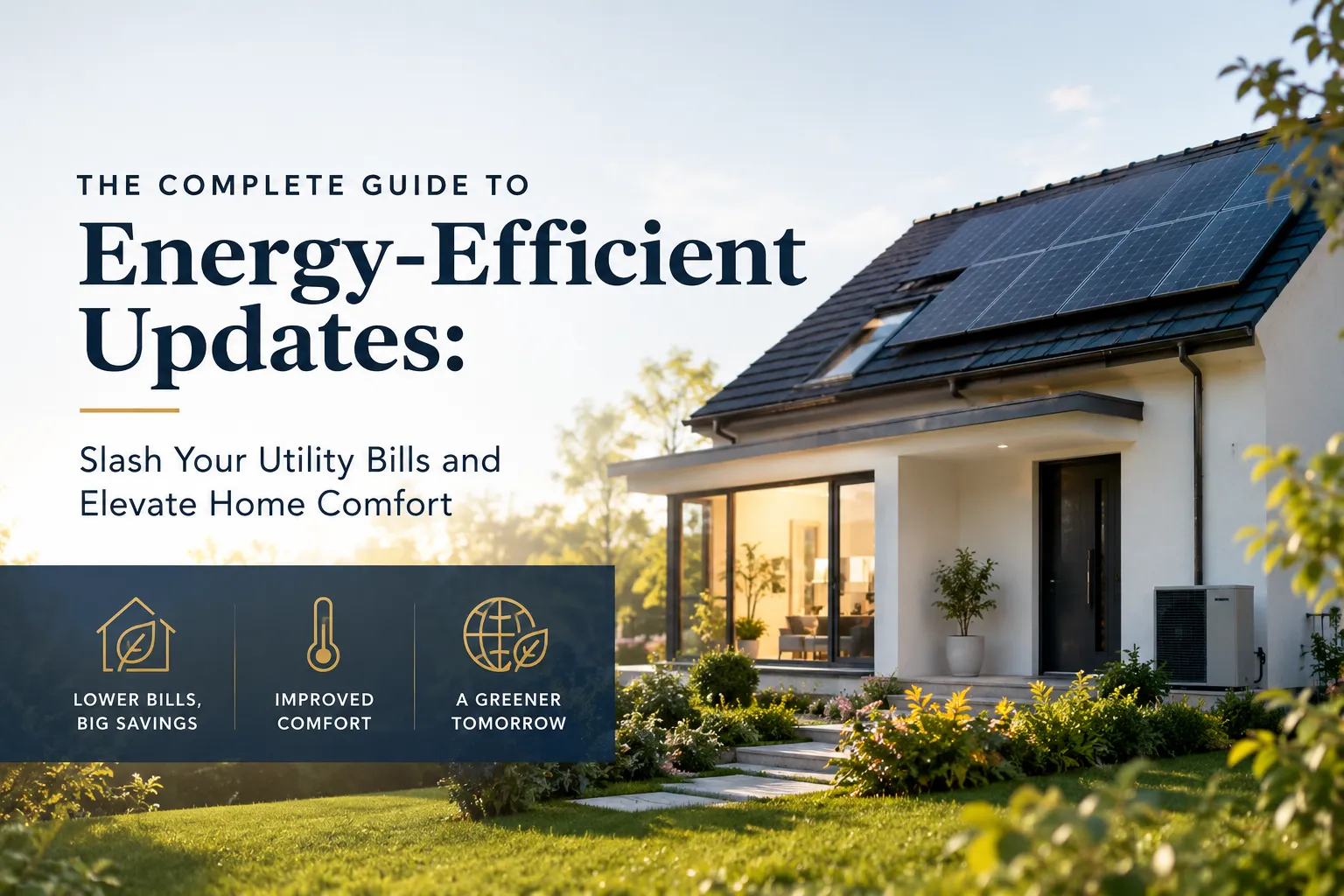
In today’s volatile economic climate, homeowners are increasingly feeling the squeeze of rising utility costs. At the same time, environmental awareness has shifted from a niche interest into a mainstream priority. Consequently, investing in energy-efficient updates is no longer just an eco-conscious gesture—it is an aggressive, highly strategic financial move. Upgrading your home’s systems, insulation, and building envelope protects your property against fluctuating energy markets while transforming your living spaces into sanctuaries of consistent comfort, healthy air flow, and modern functionality.
Many residential properties suffer from silent, invisible financial drains. Outdated heating and cooling equipment, degraded thermal barriers, and leaky windows allow expensive conditioned air to bleed into the atmosphere continuously. By treating home performance as an interconnected web, targeted retrofits yield profound compound savings. Whether your goal is a complete eco-friendly overhaul or a staged series of minor updates, understanding the mechanics of home efficiency ensures you secure the highest possible return on investment. This detailed guide explores how strategic renovations lower your overhead, increase property values, and contribute to a healthier planet.
The Interconnected Systems of Home Performance
To maximize the impact of your efficiency upgrades, it is essential to move away from viewing a house as a collection of isolated rooms. Instead, professional contractors evaluate a property using the "house-as-a-system" approach. Every structural component, mechanical device, and environmental variable directly influences the performance of the others. For example, installing a top-tier, high-efficiency furnace will fail to reduce your utility bills if your attic lack proper air sealing and insulation, as the newly generated heat will simply escape through the roof.
The foundational pillars of this system are the building envelope, the mechanical systems, and human behavioral patterns. The building envelope comprises the physical barrier separating the interior conditioned environment from the exterior elements, including the foundation, framing, exterior cladding, doors, windows, and roof. When this envelope is well-insulated and tightly sealed, mechanical systems like heating and air conditioning run optimally, cycle less frequently, and suffer far less wear and tear over time. Balancing these elements effectively creates a self-sustaining circle of comfort and long-term financial savings.
Why Modern Energy Upgrades Offer Unmatched Financial and Lifestyle Returns
While the upfront capital required for a substantial home renovation can seem daunting, the multi-layered returns on investment make it one of the most stable financial moves a property owner can make. Unlike purely aesthetic kitchen updates, energy retrofits actively generate monthly cash flow by lowering your operational overhead from day one.
Sustained Utility Bill Savings: The most immediate and satisfying consequence of improving your home's efficiency is the sharp reduction in monthly utility bills. High-performance mechanical additions and thermal enhancements can easily slice total heating, cooling, and electrical consumption by 20% to 50%. Over a multi-year timeline, these saved funds completely offset the initial purchase and installation costs, eventually shifting your upgrades into pure profit centers.
Substantial Home Value Appreciation: Modern homebuyers are increasingly tech-savvy and financially analytical. They routinely demand verification of low operational costs before making offers. Properties featuring verified, modern upgrades command a distinct competitive premium in the real estate market. Appraisers actively assign higher valuations to residences with low Home Energy Rating System (HERS) scores, making efficiency modifications an excellent vehicle for building equity.
Elimination of Drafts and Hot Spots: Beyond the balance sheet, the lived experience within an optimized home improves dramatically. Older houses frequently suffer from jarring localized temperature swings—such as freezing floors in the winter or stifling master bedrooms in the summer. Tightening the building envelope ensures an even, comfortable thermal distribution across every square foot of your floor plan.
Superior Indoor Environmental Health: A tightly sealed home, coupled with an engineered ventilation strategy, gives you total control over your indoor air. Properly managed air filtration prevents outdoor pollen, dust, humidity, and vehicular emissions from infiltrating your living spaces. This significantly reduces allergy triggers and respiratory irritations for your family while keeping interior surfaces noticeably cleaner.
The Critical Starting Point: Professional Energy Audits
Embarking on a journey of efficiency upgrades without data is like taking medication without a medical diagnosis. To avoid wasting capital on hit-or-miss updates, every comprehensive strategy must begin with a professional home energy audit. Certified energy auditors utilize specialized diagnostic technology to pinpoint exactly where your house is losing energy and which renovations will yield the greatest financial return.
During an audit, technicians deploy a diagnostic tool known as a blower door test. A powerful calibrated fan is mounted into the frame of an exterior door, depressurizing the interior of the house. This forces outside air through every hidden crack, gap, and structural flaw. Simultaneously, the auditor walks the property with a thermal imaging camera. This infrared imagery reveals precise locations where insulation is missing or compromised, highlighting hidden air leaks behind drywall, around rim joists, and near plumbing stacks with absolute clarity. The final audit report provides an objective, data-backed roadmap to prioritize your home improvements.
Fortifying the Building Envelope: Insulation and Air Sealing
If you want to maximize your energy performance, reinforcing the thermal barrier of your home is the absolute best place to start. Insulation acts as a blanket that resists the natural flow of heat, while air sealing stops the physical movement of air through gaps. Together, they form a robust shield that protects your home's interior climate year-round.
Attic Insulation Upgrades: Because heat naturally rises, the attic is often the single largest culprit for winter heat loss and summer heat gain. Many older homes possess severely degraded insulation that falls well below modern building codes. Upgrading to high R-value blown-in cellulose or thick fiberglass batts prevents thermal transfer, ensuring that your expensive conditioned air stays exactly where it belongs: inside your living spaces.
High-Performance Spray Foam Insulation: For premier home performance, closed-cell spray foam insulation offers unparalleled capabilities. When sprayed directly into open wall cavities, basements, or crawlspaces, the liquid expanding foam fills every microscopic crevice before hardening into a dense, rigid barrier. Closed-cell spray foam provides an exceptionally high R-value per inch while simultaneously serving as an absolute air and moisture barrier, drastically reducing mold risks.
Strategic Air Sealing: Before laying down fresh insulation, old air leaks must be sealed using specialized caulk and expanding foam. Technicians focus heavily on top plates, wire penetrations, plumbing drop-downs, and recessed lighting canisters. Sealing these areas eliminates the "stack effect," a phenomenon where warm air escapes out the top of the house while pulling freezing drafts in through the basement or crawlspace.
High-Efficiency Heating and Cooling Overhauls
Space heating and air conditioning collectively consume more than half of the energy used in an average American household. Therefore, upgrading outdated mechanical units to modern, high-efficiency HVAC systems represents a massive opportunity to lower your home's energy consumption.
Variable-Capacity Furnaces and Air Conditioners: Traditional HVAC units operate on a binary "on-or-off" cycle. They blast at 100% capacity until the thermostat is satisfied, then shut down completely, creating frequent temperature swings and consuming high amounts of startup energy. Modern variable-capacity systems adjust their output incrementally, running smoothly at lower speeds for longer periods to maintain a perfect, whisper-quiet climate while using a fraction of the electricity.
Advanced Electric Heat Pumps: Modern electric heat pump technology has completely transformed home climate control. Unlike traditional systems that burn fossil fuels to generate heat, heat pumps use electricity to move existing ambient heat from one space to another. In the summer, they pull heat from inside your home and pump it outside; in the winter, advanced cold-climate heat pumps extract heat from the freezing outdoor air and transfer it indoors. This process can easily cross 300% efficiency, delivering three times more heat energy than the electrical energy it consumes.
Ductwork Repair and Zoning Systems: Even the most advanced HVAC unit will struggle if it is paired with a leaky, uninsulated duct network. Sealing duct joints with mastic paste prevents conditioned air from escaping into unconditioned crawlspaces or attics. Furthermore, integrating a motorized zoning system allows you to independently manage the temperatures of different floors or wings, ensuring you only heat or cool the spaces you are actively using.
Upgrading Fenestration: High-Performance Windows and Doors
Windows and doors are the literal eyes and entryways of a property, but they also represent major weak points in the building envelope if they are outdated or poorly constructed. Swapping out leaky, single-pane glass units for modern architectural fenestration plays a massive role in creating a truly low-energy home.
Multi-Pane Glass and Low-E Coatings: Modern windows utilize double- or triple-pane designs, with the thin spaces between the glass sheets filled with dense, non-toxic insulating gases like argon or krypton. Additionally, the glass surfaces are treated with microscopically thin metallic oxide layers called Low-Emissivity (Low-E) coatings. These specialized coatings reflect infrared heat away from your home during blistering summer days while trapping warmth inside during freezing winter spells, all without obstructing natural sunlight.
Insulated Framing Materials: The material framing your window glass dictates its overall structural thermal conductivity. Traditional aluminum frames transfer heat rapidly, making them highly inefficient. Upgrading to multi-chambered vinyl, fiberglass, or clad-wood frames provides exceptional structural integrity while introducing deep internal dead-air pockets that stop thermal bridging completely.
Thermal-Core Entry Doors: Older wood exterior doors are notorious for warping, cracking, and developing perimeter air leaks over time. Upgrading to a modern steel or fiberglass composite entry door provides an elite security upgrade alongside a dense, polyurethane foam core that delivers up to five times the insulating value of a standard wood door. Paired with interlocking weatherstripping, these systems seal out wind and moisture flawlessly.
Smart Home Automation and Intelligent Energy Management
The rise of smart home technology has given property owners unprecedented control over their resource consumption. Integrating intelligent hardware allows a house to actively analyze its environment and automatically adapt its energy usage in real time, eliminating human error from the conservation equation.
Smart Thermostats: Devices like the Nest Learning Thermostat or Ecobee are the brain centers of a modern climate strategy. Rather than relying on a static, pre-programmed schedule, these devices track your family's daily movement patterns and build an automated thermal profile. When the house is empty, they automatically enter eco-modes; as you head back home, they return the climate to your preferred setting, saving thousands of runtime hours annually.
Automated Lighting Networks: Transitioning to 100% LED lighting is one of the easiest, most cost-effective efficiency updates you can make, dropping lighting energy consumption by up to 85%. Connecting those LEDs to a smart lighting framework maximizes those savings. Occupancy sensors automatically shut down lights in empty rooms, and geolocation features ensure all exterior fixtures turn off when you leave the property.
Smart Power Strips and Vampire Load Elimination: Many modern appliances, gaming consoles, and charging bricks continuously draw power even when turned off—a phenomenon known as "vampire power draw" or standby load. Smart power strips solve this by monitoring electrical currents. When they detect a primary device like a television entering standby mode, they cut power to all connected secondary devices, preventing unnecessary electricity waste.
Optimizing Water Systems: Water Heaters and Low-Flow Fixtures
Water heating is typically the second largest energy expense in a residential property. Traditional water heaters maintain a massive tank of water at a piping-hot temperature 24 hours a day, wasting energy when nobody is home. Optimizing your water delivery systems can dramatically reduce both your energy and water utility bills.
Tankless (On-Demand) Water Heaters: Tankless units completely eliminate the standby energy losses of traditional water heaters. When you turn on a hot water faucet, cold water flows into the compact unit, where powerful gas burners or electric elements instantly flash-heat the water to your exact desired temperature. This provides an endless supply of hot water while consuming zero energy when the faucets are closed.
Hybrid Heat Pump Water Heaters: For homes running exclusively on electricity, hybrid heat pump water heaters offer an incredibly efficient solution. These units feature a small heat pump mounted on top of a storage tank, pulling ambient heat from the surrounding utility room and transferring it directly into the water. This process is up to four times more efficient than a standard electric resistance water heater, saving hundreds of dollars a year.
Architectural Low-Flow Fixtures: Reducing the total volume of water passing through your home directly reduces the energy required to heat it. Installing modern, aerated low-flow showerheads and faucet aerators significantly cuts water usage while maintaining excellent pressure. Combined with dual-flush, high-efficiency toilets, these simple updates preserve thousands of gallons of water annually.
Planning Your Efficiency Roadmap and Capitalizing on Tax Incentives
Executing a successful energy remodel requires a clear financial strategy. To maximize your return on investment, you should organize your updates into a logical, phased plan that matches your budget and takes advantage of all available financial incentives.
The ideal sequence begins by fortifying the building envelope through air sealing and insulation, followed by upgrading your heating and cooling equipment. This sequence ensures your new HVAC system can be accurately downsized for a tightly sealed home, saving you money on both equipment costs and monthly runtime. Finally, once your overall consumption is as low as possible, you can look into renewable energy options like solar panel integration to offset your remaining power needs.
Fortunately, you don't have to carry the entire financial investment alone. Under the Energy Efficient Home Improvement Credit (Section 25C), homeowners can claim substantial federal tax credits that cover up to 30% of the cost for eligible upgrades—such as heat pumps, insulation, energy audits, windows, and doors. Additionally, many local utility companies offer direct cash rebates for installing high-efficiency equipment. A professional contractor like Pro-Homebuilders can help you navigate these incentives, ensuring you claim every dollar you're entitled to while building a high-performance home.
Ready to cut your energy bills and transform your home’s comfort? The expert team at Pro-Homebuilders specializes in executing premier, data-driven eco-friendly home retrofits tailored to your property's unique layout. Whether you want to upgrade your home's thermal barrier, install advanced climate control systems, or plan a comprehensive, whole-home energy overhaul, we deliver unmatched craftsmanship and seamless project management from start to finish. Check out our completed projects gallery to see our work in action, or contact us today to schedule a consultation and launch your journey toward a lower utility bill and a more sustainable future!